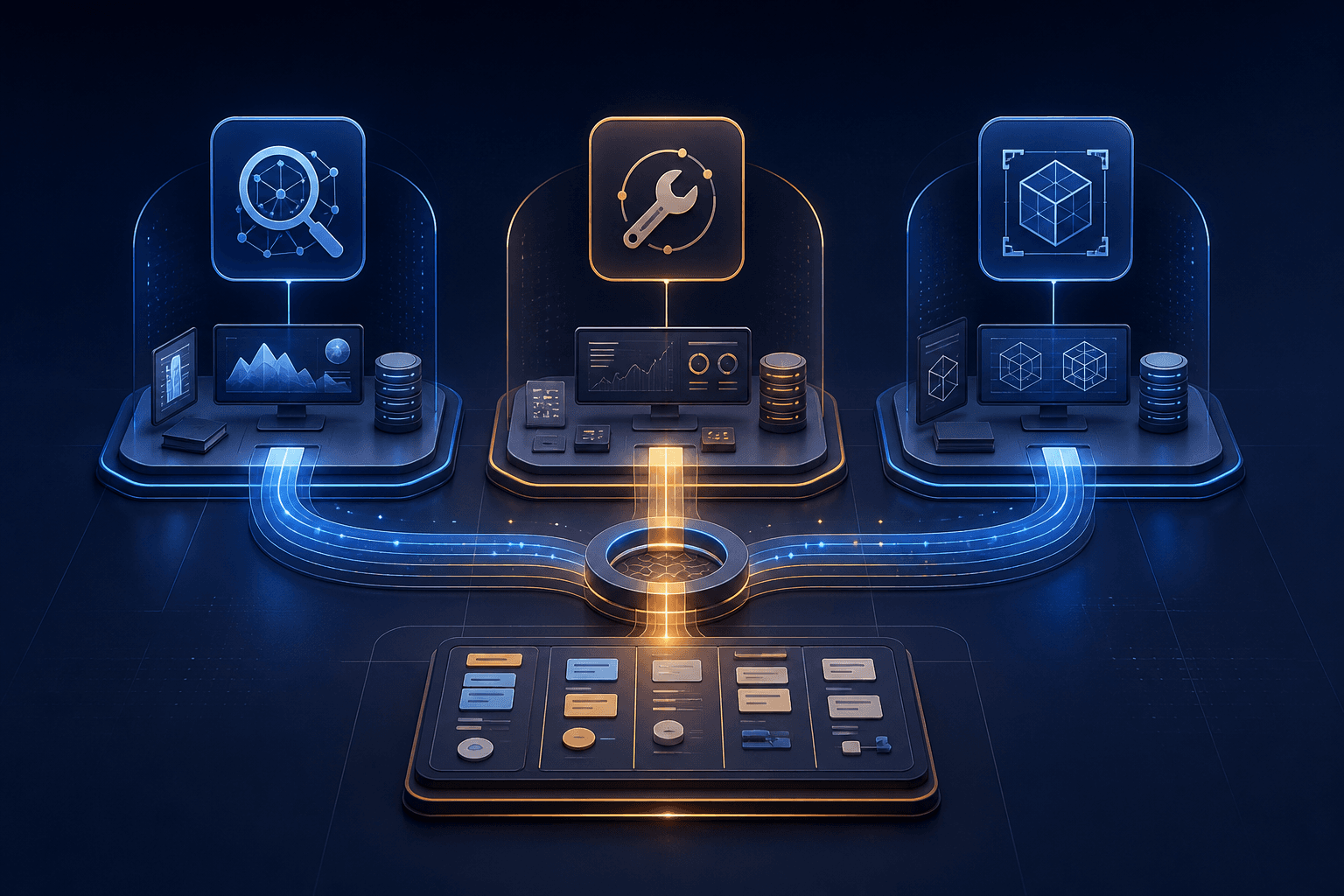

A video did the rounds on my feed this week — one of those animated explainer channels — with a hook designed to make you feel like a sucker: your $20 AI subscription is a delusion, and some power users are quietly burning a five-figure compute bill on the company's tab. The implication being: enjoy it while it lasts, because this can't possibly continue.
I went looking for the actual math. The answer turned out to be more interesting than the video: it's mostly right about the mechanism, mostly wrong about the conclusion, and the truth depends entirely on which kind of user you are.
The part the video gets right
The subsidy is real, and it's enormous at the top end.
In June, analysts at SemiAnalysis ran the obvious experiment: they bought the premium plans from the major labs and used them at full throttle for a month — long agentic tasks, nonstop code generation, the works. Fully maxed out, a $200/month tier translated to something like $14,000 in API-equivalent usage. Sam Altman has said publicly that OpenAI loses money on its $200 Pro subscriptions. One widely circulated estimate had heavy users consuming several dollars of compute for every dollar of subscription revenue.
The shape of the problem is a classic one: a tiny slice of users consumes a wildly disproportionate share of the inference. Flat-rate pricing is profitable on the person who asks ten questions a day and catastrophic on the person running an agent overnight. Every all-you-can-eat buffet learns this lesson. AI labs are learning it with GPUs.
And the unwind has visibly started. GitHub moved Copilot from flat-rate premium requests to metered AI credits this summer. Anthropic shifted enterprise customers to usage-based billing. Premium consumer tiers at $100 to $250 a month now sit above the famous $20 plan like a quiet admission of what heavy use actually costs. The labs aren't hiding it anymore.
The part it gets wrong
Here's where I'd push back, because "your $20 is a fantasy" overstates it in two ways.
First, API-equivalent cost is not real cost. When someone says a maxed-out subscription is "worth" $14,000, they're pricing it at the per-token rates the company charges outside developers — rates that carry retail margins, because that's what retail prices do. The company's actual marginal cost of serving one more token is a fraction of the API sticker price. The subsidy is real, but the headline number is inflated by the very pricing it's being compared against.
Second, most $20 subscribers are not power users. This is the part the outrage videos skip. A typical subscriber — some emails, some questions, the occasional document — costs the provider somewhere around the subscription price, give or take. Estimates I've seen put an average Plus-tier user anywhere from modestly profitable to modestly subsidized. The economics only go vertical for the small slice running agents around the clock. Which means the $20 plan isn't a hole in the balance sheet; it's a loss leader on a distribution curve, subsidized partly by investors and partly by the quiet majority who barely use it.
And one more tailwind: compute keeps getting cheaper. Roughly speaking, each hardware generation serves the same model for less. A plan that's a money pit today drifts toward viability on cost curves alone.
Why the price is frozen at twenty dollars
Notice something odd: ChatGPT Plus launched at $20 in early 2023. Three-plus years of model leaps later, it's still $20. Claude landed at $20. Gemini landed at twenty-ish. Nobody raised it, nobody undercut it. That's not a market clearing price — that's an anchor.
Twenty dollars is the psychological threshold for "reasonable software subscription," filed next to streaming music and cloud storage. The labs converged on it because the land grab mattered more than the margin: users, habits, default status. When a price doesn't move while the product improves a hundredfold, the price isn't the business model. The price is the marketing.
Which reframes the video's question. "Can this last?" is the wrong thing to ask. The right question is: what happens to me when the subsidy reprices?
What I'm doing about it, personally
Full disclosure of my bias: I see both sides of this market every day. Part of my AI usage rides on flat subscriptions, and part runs through APIs where I pay per token and watch the meter in real time. When your own setup sends you itemized bills, you stop romanticizing either side.
My read, for whatever it's worth:
- Use the subsidy, don't marry it. A $20 plan doing $200 of work for you is a genuine gift. Take it. Just notice which of your workflows only make sense at subsidized prices.
- Metered pricing is the honest future, and that's fine. Pay-per-token feels scarier and is often cheaper for normal humans. The people who should worry are the ones whose entire workflow assumes unlimited frontier-model calls forever.
- Diversify like it can change tomorrow, because it can. Providers reprice, rate-limit, and restructure on quarters, not years. Any setup that dies when one plan changes is a setup that will eventually die.
- Watch the tiers, not the headlines. The $20 anchor probably survives — it's marketing. What changes is what it buys: caps, speeds, which models you get. The real story is always one page deep in the pricing FAQ.
So no, I don't think the $20 subscription is a delusion. I think it's a promotional rate on the most useful technology of the decade, and promotions end. The video had the mechanism right — someone is paying for your compute, and it isn't you. It just forgot the follow-up question.
The subsidy isn't the scam. The scam would be building your life on it and acting surprised when the bill arrives.
Are you a profitable user or a subsidized one? The answer's in your usage graph — and it says more about your future pricing than any video will.