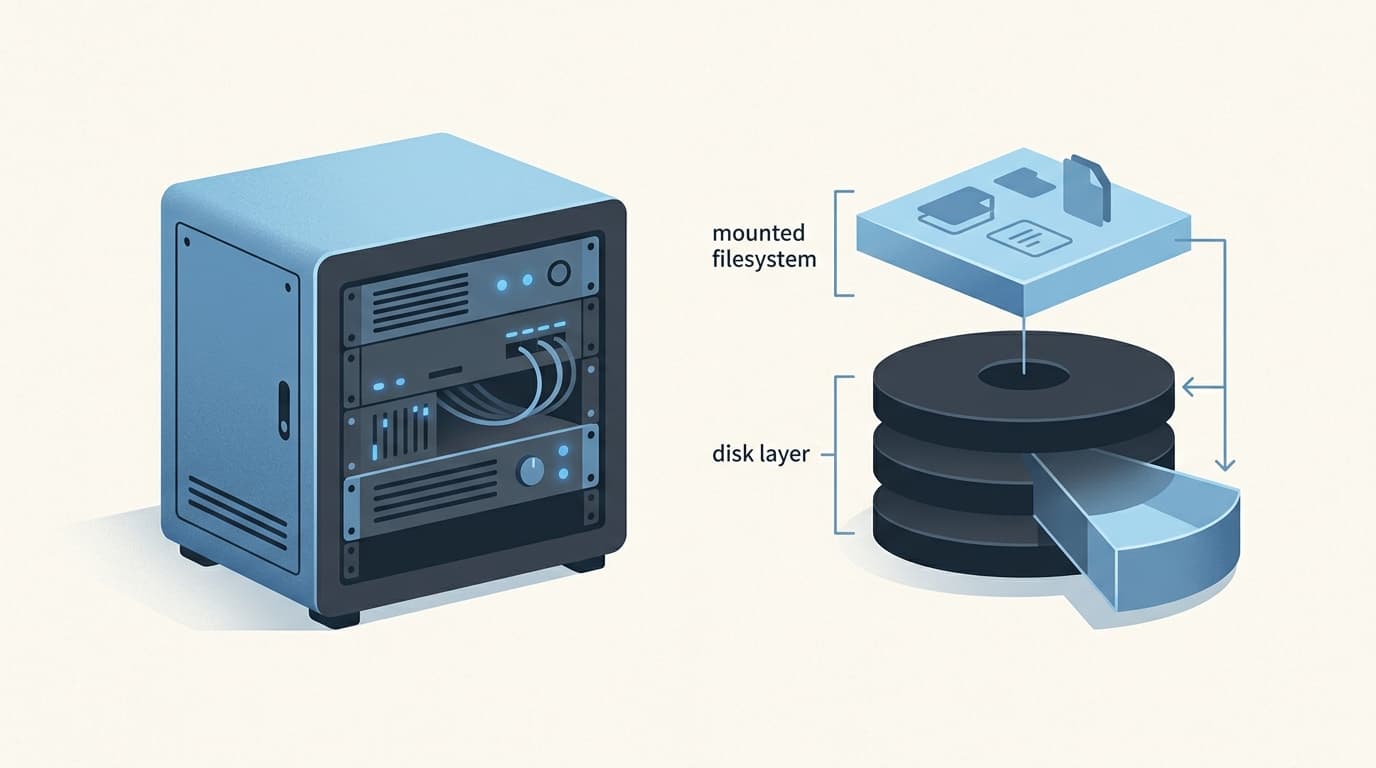

I had a simple goal this week: open my home agent's dashboard on my iPad, from anywhere, without exposing anything to the public internet.
The machine in question sits in my house, bound to localhost, doing its thing. My iPad sits wherever I am. The gap between those two is exactly the problem Tailscale exists to solve, and I'd been meaning to put this box on my tailnet anyway — it would join the little fleet of machines I already have meshed together.
Fifteen minutes later, the networking was done. Genuinely, start to verified-working, fifteen minutes.
Then the iPad app ate the rest of my evening, and I want to talk about both halves, because the contrast is the whole lesson.
The part that just worked
The install is one script. The one flag worth knowing about is --operator, which lets a normal user run the Tailscale CLI without sudo — small thing, but it saves you the sudo dance every time you touch the config afterward.
Then the actual exposure design, which is the part I liked most: the service itself never leaves loopback. It stays bound to 127.0.0.1, unreachable from my LAN, unreachable from the internet. Tailscale's Serve feature proxies a proper HTTPS URL — https://myhost.my-tailnet.ts.net — down to that loopback port, with a real TLS certificate, because my tailnet already had MagicDNS and HTTPS certs enabled.
No port forwarding. No router admin page. No dynamic DNS. No certbot cron job. My home IP address never enters the picture anywhere. I loaded the dashboard from another machine over the tailnet, got a clean 200 with a valid cert, and sat there feeling like I'd gotten away with something.
This is the pitch Tailscale makes, and for once the marketing undersells it. The hard part of "reach my home stuff from outside" has never been the networking — it's been the pile of adjacent chores (DNS, certs, firewall holes) that each carry their own security homework. Serve just deletes the pile.
The part that didn't
Then I tried to pair the mobile app, and walked straight into a wall labeled "Step 3 of 4: Authentication."
The error: "Credential save failed — could not securely save the new gateway credential." Which sounds like an iOS Keychain problem. It wasn't — or at least, the server-side logs told a much more embarrassing story first.
Gotcha one: there are two different approval commands. One approves the device pairing, a different one approves the node registration. My first approval looked successful — the CLI output certainly implied success — but buried in the logs was a partial denial: the node role got approved while the operator role the app also needed was silently rejected. So the app was waiting for a complete credential set that was never coming, and its "could not save" error was really "I never received anything valid to save."
Gotcha two: approval requests expire fast. About one to two minutes. Pairing from chat meant every request died of old age before a human could approve it. My workaround was a background loop that polled for pending requests and auto-approved them within a few seconds — a janky little robot bouncer — and even then I had to mint a fresh setup code, because the original QR had also expired while we were debugging.
The app still wouldn't save the credential. I never fully confirmed the root cause. Best theory stands at "incomplete credential set," with "iOS Keychain being iOS Keychain" as the runner-up.
The grown-up part: reverting
At some point in hour whatever-it-was, I did the math on my own evening and shelved the project.
And here's the part I'm actually proud of: the revert took five minutes and was verifiable. Reset the serve config → "No serve config." The ts.net URL → dead, connection refused. The service → back to loopback-only, byte-for-byte the same posture as before I started. Nothing reachable from anything.
I left in place the pieces that expose nothing: Tailscale stays installed and connected — the box is just a tailnet member like my other machines, publishing nothing. Two config lines that are completely inert while the gateway is loopback-only. Re-enabling the whole thing later is a one-flag flip and a restart.
Then I wrote down everything the investigation surfaced — the two-command gotcha, the expiry window, the partial-denial log signature, the checklist for next time (does the iPad have a passcode set? clean reinstall for a fresh Keychain? try manual token entry instead of the QR flow?). Next time we start from the good stuff instead of from zero.
What I actually learned
Error messages describe where the failure was noticed, not where it happened. "Credential save failed" sent me to the Keychain. The actual problem lived three steps upstream, in an approval that half-succeeded. The more confident the error message, the more suspicious you should be of its implied diagnosis.
Partial success is the most dangerous kind. A full failure is loud. A "success" that quietly dropped one of two roles cost me an hour of debugging the wrong layer entirely.
Revertability is a feature you design for upfront. The only reason a failed evening cost me an evening — and not a weekend of un-breaking things — is that every step I took was reversible by construction. Loopback by default, expose deliberately, revert cheerfully.
Knowing when to stop is a skill. The network part worked beautifully. The app fought me. The correct move was to bank the win, revert the exposure, document the findings, and go have dinner — not to keep swinging at 11 PM because the sunk cost said so.
The dashboard will make it onto the iPad eventually. The foundation is sitting there, one flag flip away, waiting for a day when I feel like arguing with a mobile app again.
It was not yesterday.