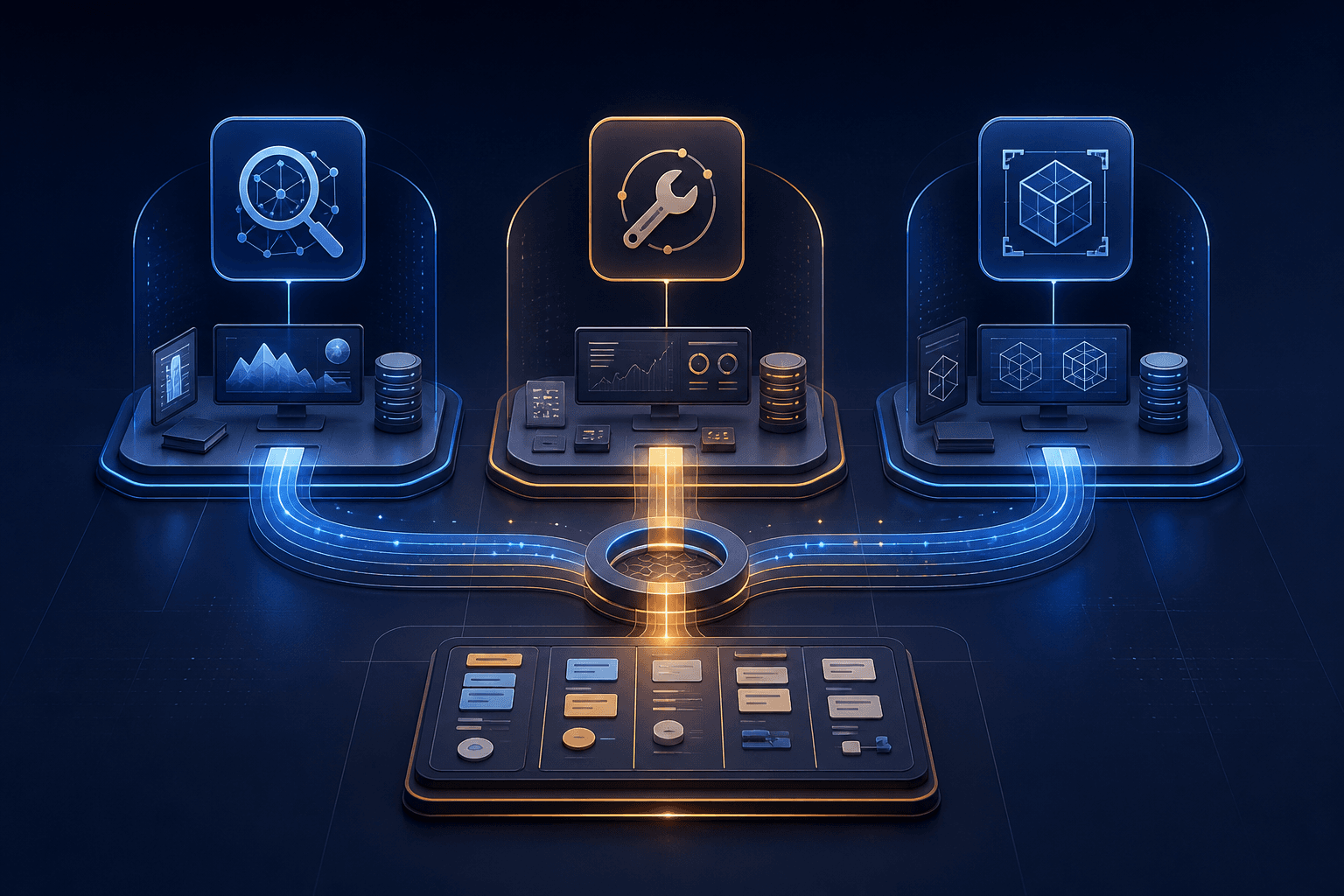

I upgraded to a much larger model allowance and still watched scheduled work hit the same overload three times in one night.
The dashboard showed plenty of quota. The endpoint answered with HTTP 429 anyway: the engine was overloaded.
That distinction is easy to miss when model services package access as a subscription. Quota answers, “How much am I allowed to use?” Capacity answers, “Can the provider serve me right now?” Paying for a bigger bucket does not help when the tap itself is dry.
My first reaction was pure annoyance. My second was a theory: once Kimi K3’s weights are released, other providers can host it, the load can spread out, and Moonshot’s servers should get some breathing room.
I still think that is directionally right. I just do not think it will happen overnight.
Open weights change the failure domain
Right now, using K3 means depending on hosted infrastructure. If that serving path is overloaded, my healthy quota is mostly decorative.
Moonshot says in its K3 launch announcement that the full model weights will be released by July 27, 2026. Once the weights are actually available, an independent provider can download them, build a serving stack, and offer the same underlying model through different infrastructure.
That is the real reliability promise of open weights.
It is not simply “I can run this on my computer.” For a frontier model, that may be the least realistic use case. The larger benefit is that no single company has to remain the only landlord. Multiple hosts can compete on capacity, price, latency, region, and uptime. If one is overloaded, users can route elsewhere without abandoning the model entirely.
Closed models can have multiple regions and excellent redundancy, of course. Open weights do something different: they let organizations outside the original vendor create redundancy the vendor does not control.
They change who is allowed to solve the outage.
Releasing a file does not create a cluster
The catch is K3’s size.
Moonshot describes a 2.8-trillion-parameter mixture-of-experts model, with 16 of 896 experts active for each token. Activating only part of the model reduces computation, but every expert still has to live somewhere. At its native 4-bit weight format, the raw weights alone are roughly 1.4 terabytes before runtime overhead, caches, and long context enter the picture.
That is not a gaming-PC deployment. It is a data-centre project.
A provider has to obtain enough accelerators, make the new attention architecture work efficiently, distribute the weights across machines, tune batching and caching, expose a stable API, monitor it, and price the whole thing without setting money on fire. Moonshot has contributed related caching work to the vLLM ecosystem, which should help, but compatibility is not capacity.
The first day of an open-weight release may even make congestion worse. Curiosity creates traffic. Benchmarks, demos, quantization experiments, and new integrations all arrive at once. Some people who ignored the hosted launch will show up because the downloadable release is news.
Open weights make distribution possible. They do not make it instantaneous.
“Available somewhere else” is not redundancy
There is another trap here: confusing a second endpoint with a second failure domain.
If two services ultimately proxy the same upstream, they are two URLs attached to one bottleneck. If two hosts run in the same cloud region with the same accelerator shortage, their failures may still travel together. A router is useful, but it cannot route around an outage if every route ends at the same building.
Real fallback means asking awkward questions:
- Is the model independently hosted?
- Does the fallback use a different provider and region?
- Can my workload tolerate a different model when exact compatibility is unavailable?
- Can interrupted work resume without repeating side effects?
For my own scheduled work, the immediate answer is not “wait for open weights and trust the ecosystem.” It is to keep important jobs recoverable, use bounded retries with backoff, and have a fallback model that is genuinely independent. If a task writes or publishes something, it also needs a checkpoint so uncertainty does not become duplication.
That is ordinary reliability engineering. Model infrastructure does not get an exemption because the demos look magical.
Distillation may matter more at home
Open K3 weights will also let researchers experiment with lower precision and distillation, but physics remains stubborn.
Quantizing a model stores its weights with fewer bits. K3 is already designed around 4-bit weights, so the usual trick of shrinking a 16-bit model to a quarter of its size is largely baked in. Pushing toward 3-bit or 2-bit may reduce storage further, but quality loss becomes much harder to predict.
A smaller distilled model is more realistic for local hardware. Instead of squeezing every original parameter onto one machine, a compact “student” learns to imitate selected capabilities. It will not preserve the full breadth of K3, but it may be excellent for routine coding, tool use, and repeatable home workloads.
That suggests a useful split: a smaller local model for dependable routine work, and a frontier hosted model for the hard problems. Local does not have to mean equally capable. It can mean available when the clever thing is busy.
Openness is an exit, not a guarantee
I am still looking forward to the weight release. It creates choices that do not exist while one hosted path holds the switch.
But I am adjusting the expectation. Open weights do not guarantee cheap inference, instant alternate providers, perfect portability, or fewer 429s next week. They create the conditions for competition and independent capacity to emerge.
That is slower than a fix and more important than a fix.
A quota is permission from one provider. Open weights are permission for an ecosystem to build another door. When reliability matters, which permission would you rather have?