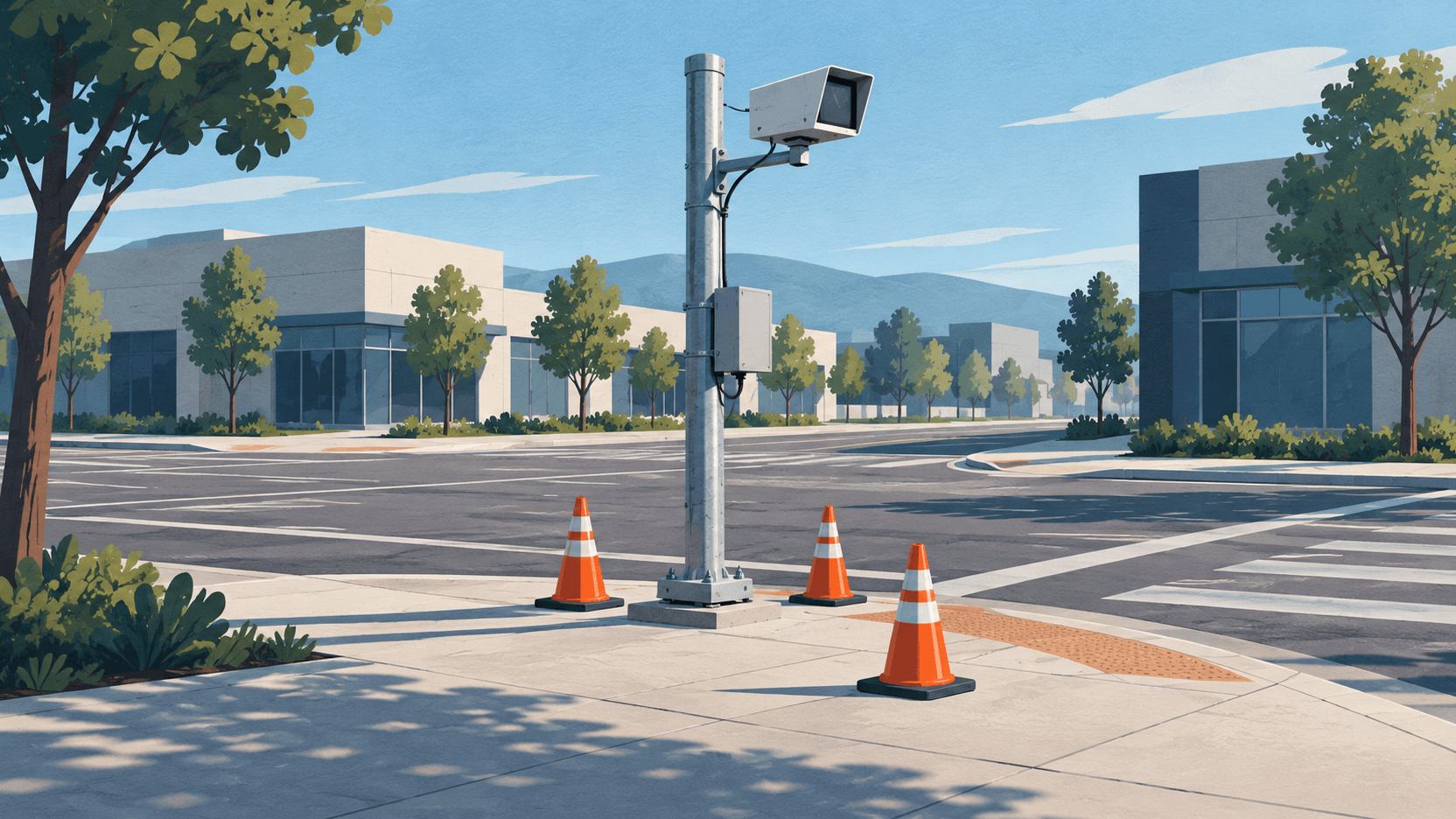

A new pole beside a familiar intersection can make a routine trip look like a rule change. Add a patch of sidewalk work, a few cones, and the usual local speculation starts doing cardio.
For Metro Vancouver residents, the useful distinction is simpler: B.C. is replacing the hardware used by its existing intersection safety-camera program. A pole, crew, or temporary work zone is not, by itself, proof that enforcement has paused, that a camera now records speed, or that an intersection has acquired a new local rule.
The Province says ICBC is replacing all 140 intersection safety cameras in phases, with work expected to continue through spring 2027. Its September update also says the existing cameras will remain operational during installation, and that traffic offences, fines, and penalties are not changing. In other words, the visible project is a hardware swap inside a continuing program—not a curbside puzzle that needs decoding.
That is a useful bit of boring news. Boring is often what keeps a roadworks rumour from turning into a very confident group-chat fact.
What is changing—and what is not
ICBC says the current cameras are nearing the end of their service life and are being updated with modern technology. Some locations may need minor road or sidewalk work for new poles and wiring. The Province says roughly 90 locations may require that work, while ICBC says it and its partners are coordinating replacement activities with municipalities to reduce impacts on people using the road.
The provincial release gives a general expectation that work at each of those sites will take about two weeks. Neither that release nor ICBC’s current program page provides a province-wide, intersection-by-intersection schedule. Those sources therefore cannot establish what is happening at a particular junction today.
The practical response is wonderfully unglamorous: obey current traffic controls and work-zone signs, then check the official program information if the question is about a camera. The latter is better evidence than a pole, a flash, or a map screenshot making the rounds.
The camera type is the detail worth checking
The official location page says B.C. operates 140 intersection safety cameras around the clock. Of those, 105 monitor red-light violations and 35 monitor both red-light and speed violations. The distinction matters because the two camera types are not interchangeable.
RoadSafetyBC labels them Red Light and Speed & Red Light. The official page also describes the warning signs and publishes a location/type table. That table is the practical source of truth for a particular intersection; it is more dependable than trying to identify a camera type from equipment at the curb.
The program is not a new blanket rule about every signalized intersection. Nor does replacement work convert each location into a speed-and-red-light site. The provincial release says the new cameras will have similar enforcement and data capabilities to the previous cameras; it does not establish the classification of every location after future replacement work. If you need to know whether a listed location currently monitors red-light violations only or both red-light and speed violations, check its current classification in the official table.
The 60-Second Intersection Camera Check Card
Save this for the next time an intersection looks different and the internet has already drafted three explanations.
1. Name the two roads, then use the official list.
Search the provincial camera-location table. Do not infer a camera’s status from roadside equipment or an unverified map pin.2. Read the classification, not the rumour.
Look for Red Light or Speed & Red Light in the official information. The province says 105 cameras monitor red-light violations and 35 monitor both red-light and speed violations.3. Do not mistake replacement work for downtime.
The Province says existing cameras will remain operational while replacements are installed, and that offences, fines, and penalties will not change.4. Treat work-zone details as local and temporary.
Some locations may need road or sidewalk work. The cited provincial release and ICBC program page do not provide a province-wide, intersection-by-intersection schedule. Follow live signs and traffic controls; do not assume a visible crew means a camera was activated, deactivated, or reclassified.5. If a ticket arrived, use the document and the official ticket hub.
Follow the information on the ticket and ICBC’s current Tickets and penalties hub, which links to payment and dispute information. Procedures can change, and this article is public information—not legal advice or advice about an individual ticket.
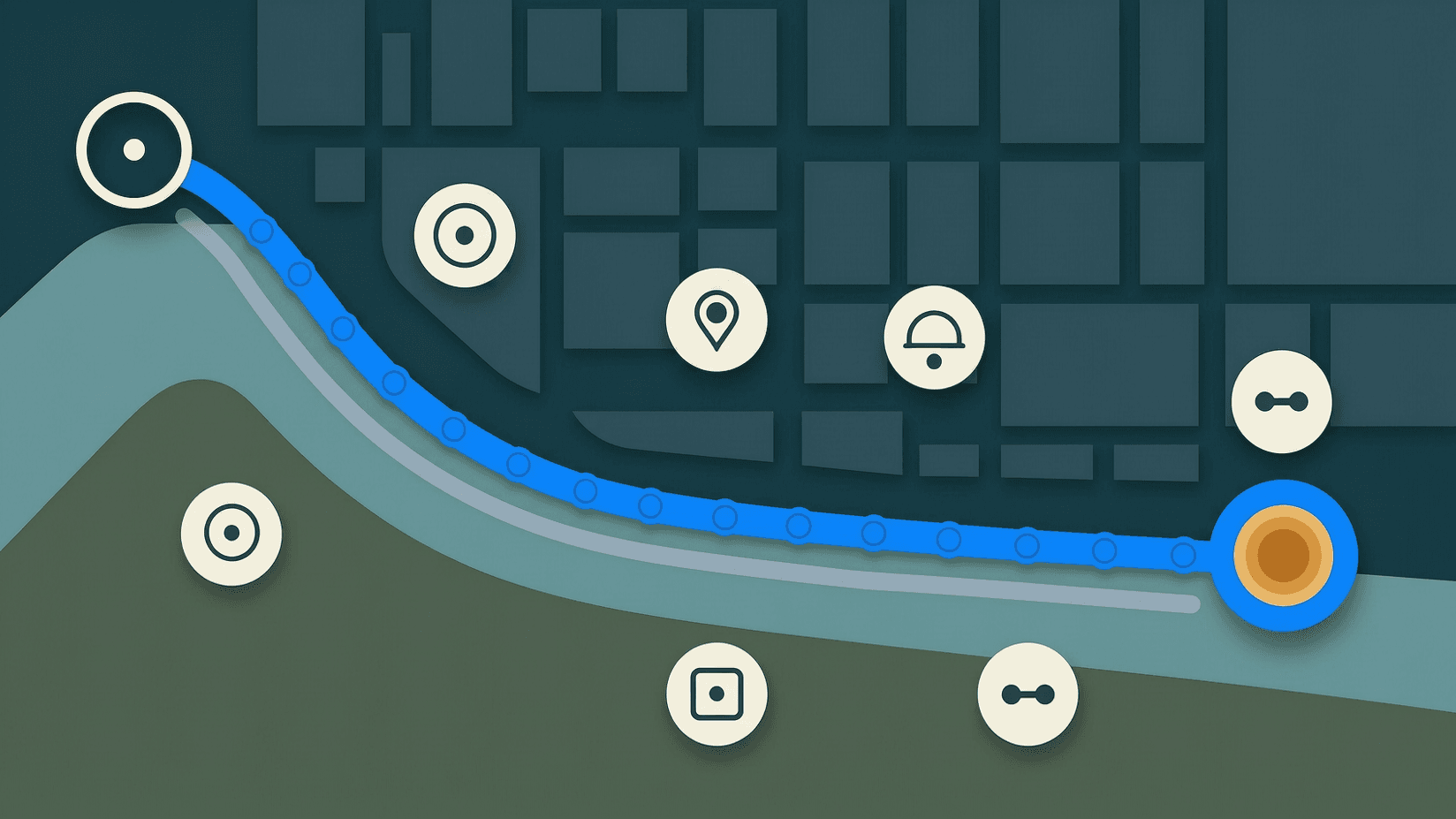
The map and table can tell you whether a location is listed and what type of camera is recorded there. They cannot establish whether a crew is scheduled at that location today.
Three conclusions to leave at the curb
First, construction does not mean enforcement is off. The current provincial announcement says existing cameras stay operational during installation. That is clearer than interpreting an unfinished pole from across several lanes of traffic.
Second, a camera is not automatically a speed camera. The official program separates red-light-only locations from the smaller group that monitor both red-light and speed violations. The check takes less time than arguing from the passenger seat, and it produces better evidence.
Third, a new-looking installation is not proof of a new traffic rule. The standing rules of the road and live work-zone controls still apply. Neither the cited provincial release nor ICBC’s program page offers an intersection-specific activation calendar, so those sources cannot support one.
There is also a boundary worth keeping. ICBC says an intersection-safety-camera ticket is issued only when it has clear evidence of a red-light violation or a vehicle entering an intersection well over the posted limit. That general description is not a way to assess anyone’s ticket, evidence, or options. If a ticket is involved, the safe move is to read the materials that came with it and use the current official ICBC information rather than generic advice online.
A slower check beats a faster assumption
The construction story here is real, but it is not the whole story. What residents can verify is more useful: whether an intersection is on the public list, how it is classified, what the current program says about replacement work, and where to find official ticket information if they need it.
That is not quite as thrilling as solving a mystery from a lamp post. It is, however, a much better way to keep a temporary streetscape from becoming a permanent misunderstanding.
Sources
- Government of B.C., “Upgrading B.C.’s intersection cameras to help prevent crashes, keep people safe” (September 10, 2026).
- ICBC, “Intersection Safety Camera program.”
- RoadSafetyBC / Government of B.C., “Where the intersection safety cameras are.”
- ICBC, “Tickets and penalties.”