
“Free thermostat” is the kind of headline that makes a person open a new tab before the kettle boils. Fair enough. But BC Hydro’s current offer is not mainly a brand-picking exercise. It is a fit-and-terms decision: does the home qualify, does the person ordering control the account and installation decision, and do the conditions make sense for the household?
BC Hydro’s offer page says eligible residential customers can receive up to five free Mysa or Sinopé smart thermostats for homes with electric baseboard heating, with Peak Saver enrollment required. That is useful for homes it fits. It is not a general smart-home rebate, and it is not a reason for every Metro Vancouver household to rush to claim one.
The quickest way to make the offer less mysterious is to run these seven checks before ordering.
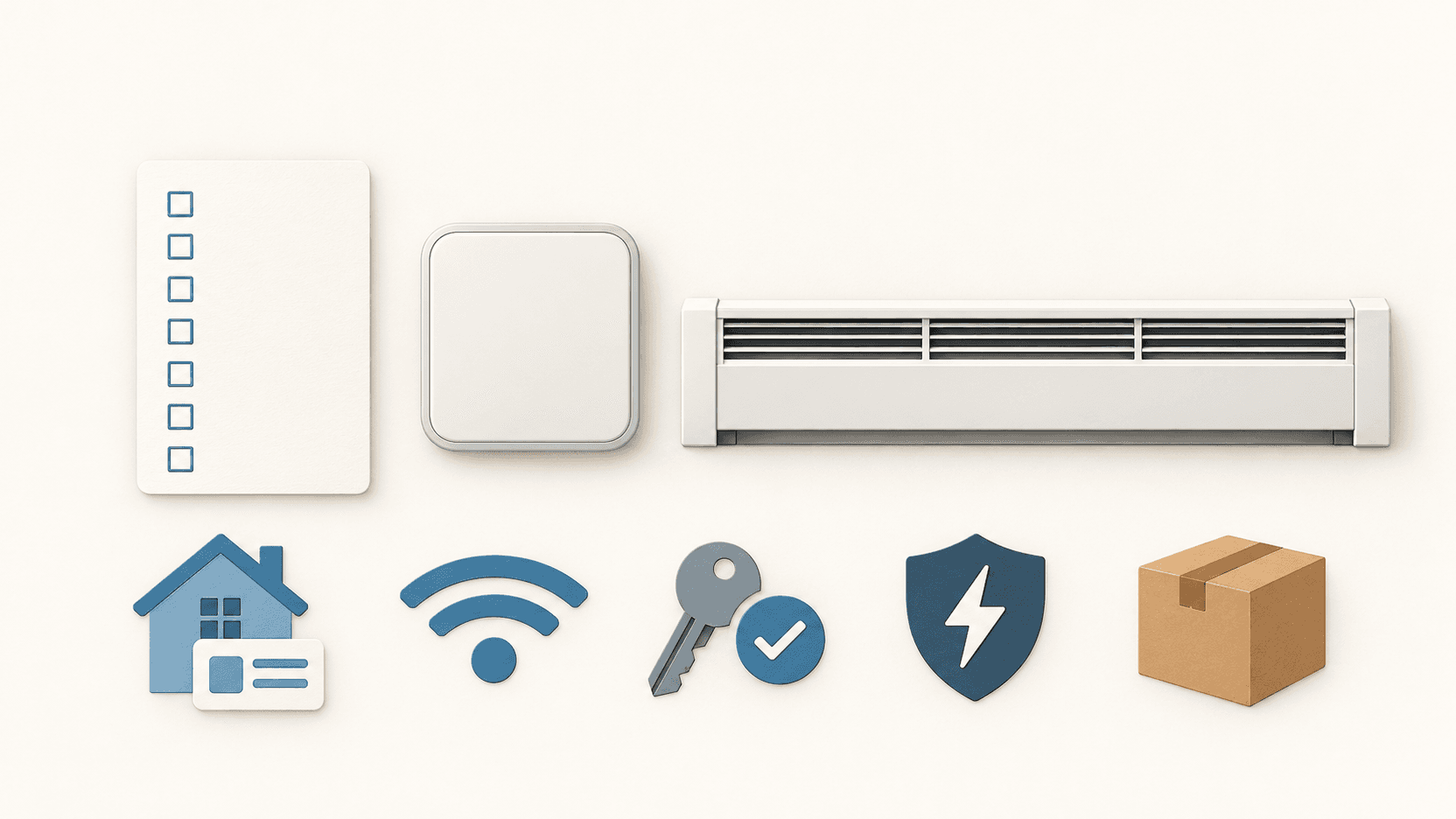
Free Thermostat Decision Card
1. Heat check: Is the home heated by electric baseboards? The current offer says these thermostats will not work with other heating systems. If the home uses a heat pump or another setup, stop here rather than turning an offer into a compatibility puzzle.
2. Account and address check: Confirm the person ordering is the residential BC Hydro account holder, has an active MyHydro profile, and is ordering for the same service address. The offer page covers those basics. The Peak Saver eligibility material and terms, rather than the offer page, set out the Residential E-Plus exclusion and active-profile requirement. Read the live pages, not a screenshot or a neighbour’s summary.
3. Tenancy and stay check: A renter needs consent that covers installation, program participation, and what happens to the units if they move. The terms also require an intent to reside at the site for two consecutive years after installation. That is more than a quick okay for a control event. This is not tenancy advice; it is a practical pause button before hardware arrives.
4. Compatibility and safety check: Use the official Sinopé compatibility checker or Mysa compatibility checker for the actual wiring configuration. BC Hydro identifies Sinopé for two-wire setups and Mysa for four-wire/two-pair setups. Hardwired work has a regulatory and jurisdictional boundary in B.C.; this is the moment for a qualified electrician and the relevant authority, not an improvised wiring tutorial.
5. Control-event check: Peak Saver can make temporary thermostat adjustments during winter Control Events. An override is available, but opting out of more than half of events may affect eligibility for a seasonal reward. Free thermostats are excluded from the enrollment incentive; that is separate from any conditional seasonal reward.
6. Cost and remedy check: The hardware may be free, but the terms put installation and associated work at the participant’s cost and responsibility. They also describe possible breach remedies, including return of uninstalled devices, full-retail-value repayment for affected installed devices, and withheld rewards. Those are terms to read, not automatic penalties or legal advice.
7. Stay or return check: For each thermostat, the 30 days run after it is received: install, connect, and enroll it, or return it to the manufacturer in original condition under the manufacturer’s instructions. The two-year minimum runs from each thermostat’s enrollment. If a participant moves during the Minimum Participation Period, the units stay at the site and any participant-held title transfers to the owner; the departing participant’s maintenance, Wi-Fi, and enrollment obligations cease.
Offer terms, device availability, compatibility, and local permit requirements can change. Check the live pages before ordering.
Start with the heating system, not the brand
The offer is specifically for electric baseboard heat. That sounds obvious until a home has more than one heating source, or “electric heat” gets used as a catch-all for equipment that is not an electric baseboard. The official offer page is the useful boundary: the offered thermostats are for electric baseboards and will not work with other heating systems.
That is also why the compatibility check matters. A thermostat is not a decorative plug-in accessory. BC Hydro’s page distinguishes the supported wiring configurations and links to the manufacturers’ checkers. Use those live checkers for the home in question; do not infer compatibility from a photo, a wall plate, or a device someone bought years ago.
The less glamorous conditions are the important ones
The account and address requirements are easy to treat as checkout details. They are part of whether the offer is available at all. The current offer page requires a residential BC Hydro account, an online MyHydro account, the same service address, and enrollment during checkout. The Peak Saver terms add program-eligibility details such as the active profile condition and E-Plus exclusion. The live wording—not this article—should settle a specific order.
For renters, consent is only part of the decision. Under the free-thermostat terms, a non-owner’s consent needs to cover installation, participation, and the units remaining at the site and title transferring to the owner if they move during the Minimum Participation Period. The participant must also intend to remain at the site for two consecutive years after installation. That does not answer every lease or strata question. It does mean an order should not be treated as a portable renter perk to untangle later.
The installation boundary is similarly plain. Technical Safety BC says permit requirements and the issuing authority can depend on the work, property, and location; a replacement thermostat done by a licensed contractor is treated differently from other work. Confirm the requirement for the specific home and jurisdiction. No one needs a heroic internet wiring adventure before lunch.
What Peak Saver changes
Peak Saver is the other half of the offer. On its offer page, BC Hydro describes peak events of no more than four hours and adjustments of one to three degrees, with an override available. The controlling terms are more qualified: section 5 describes one-to-four-hour durations and up to two Control Events in a day as expectations, while reserving BC Hydro’s discretion over duration and count. That is not a reason for panic or hype. It is a reason not to read the four-hour web-page description as an absolute contractual ceiling.
For Control Events, the terms say notice may not be given. Challenges use a different notification process, so the no-notice statement should not be stretched across every kind of event. The offer and enrollment pages also say that opting out of more than 50% of events can affect seasonal-reward eligibility. They do not turn a reward into a promise, and the free-thermostat offer does not qualify for the enrollment bonus.
The current terms deserve their own five-minute read. The receipt-based 30-day timeline, two-year enrollment period, installation costs, move rule, and possible remedies are material conditions—not footnotes to discover after installation. Then open the live offer and terms again at checkout. A few boring checks now beat an avoidable surprise attached to the wall later.