
A question I chewed on this weekend: Google launches products and kills them again, over and over, and somehow it never sticks to them. Dropbox tries the same thing and the business press writes it up as a company that can't find its second act. Where's the fairness in that?
There is a mild double standard here. But the more I dug into the actual numbers, the more I found a real difference underneath it — same behavior, wildly different stakes.
First, credit where due: Google's graveyard is real
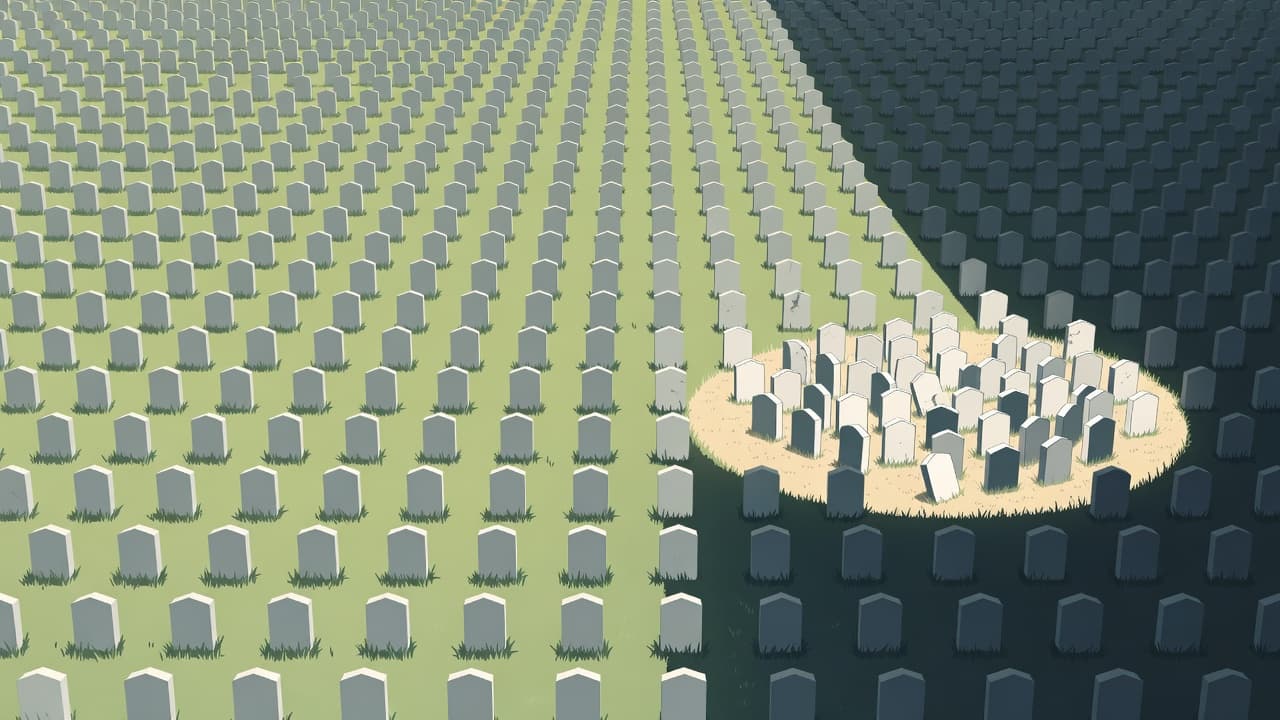
Let's not let Google off too easily. Reader. Inbox. Stadia. Google Domains. More messaging apps than any reasonable person can enumerate, several of which overlapped with each other while alive. There's an entire community-maintained website that exists only to memorialize dead Google products.
And it has cost them something real: trust. Plenty of people now look at a shiny new Google product and think "why would I build a workflow on this when it'll be gone in three years?" That's reputational damage, and it's earned.
So the premise that Google faces no consequences is wrong. The correct version is: Google faces consequences it can afford.
Why Google can afford a graveyard
Look at the structural position:
- A money machine that doesn't care. Search advertising generates so much profit that a dozen dead side products are a rounding error. The 14th failed messaging app does not touch the core business.
- Distribution most companies would kill for. Android, Chrome, Search, Gmail — a new Google product can reach a billion people on day one for free. Experiments are cheap when the audience is built in.
- Portfolio math. Google launches dozens of experiments. Most die. But occasionally one becomes Maps, or Gmail, or Photos, or YouTube — and a single hit pays for every flop several times over.
- The stakes were low to begin with. Most killed Google products were free side bets, not the company's answer to an existential question.
Google is a rich movie studio that produces thirty films a year. Twenty can flop, because three blockbusters cover everything.
Dropbox's experiments were never hobbies
Now look at Dropbox's last decade with fresh eyes:
- Mailbox — acquired for a reported ~$100 million, dead by 2016
- Carousel — the photo app, dead the same year
- Paper — the document editor, launched to a shrug and never found an audience
- HelloSign — acquired, renamed Dropbox Sign, still around but not a growth engine
- DocSend — acquired for $165 million in 2021, still ticking, not transforming anything
- FormSwift — acquired for $95 million in late 2022; investment cut in 2025, winding down by the end of 2026
- The password manager — discontinued in 2025
Each of those was supposed to be, in some sense, the answer. Not a free side bet — the next growth engine. Because the core file-sync business, the thing that made Dropbox famous, has matured and stopped growing.
The numbers are right there in the earnings reports. Fiscal 2025 revenue was $2.521 billion — down 1.1% year over year, the company's first absolute decline. Strip out FormSwift, the product being wound down, and revenue grew 0.2%. Paying users sit around 18.1 million and are slowly shrinking. The most recent quarter managed +0.8% reported, +2.0% excluding FormSwift. Flat, profitable, disciplined — and not growing.
Even Drew Houston, the CEO, said the quiet part out loud on a podcast: the pattern became "build it, launch it, nobody uses it, and then shut it down." He called the resulting narrative "super negative." When the founder is conceding the meme, the meme has landed.
Dropbox is not a rich studio. It's a successful actor whose famous franchise is aging, and every attempted comeback matters, because one of them eventually has to work.
The structural problem nobody talks about
There's one more asymmetry that makes the Dropbox story sadder than the hot takes suggest: storage is a loss leader for its biggest competitors.
For Apple, Google, and Microsoft, cloud storage is a free feature wrapped around something else — iPhones, Workspace, Microsoft 365. They can afford to give it away because it sells the thing that's actually profitable. For Dropbox, storage is the business. The category it created got commoditized by companies for whom the category is a giveaway.
So when Dropbox bought DocSend or FormSwift, it wasn't shopping for fun. It was shopping for a future, against competitors who could bundle its entire reason for existing into a subscription people already had.
The honest steelman
All that said — I'll defend the killing itself. Trying things and shutting down the weak ones is not a vice. The alternative is zombie products: maintained forever, loved by no one, slowly draining engineering and morale. Winding down FormSwift instead of letting it shamble on is the disciplined move. Google's critics and Dropbox's critics both forget this.
And the obituary is premature. Over a billion dollars of free cash flow a year, expanding operating margins, huge buybacks, and a current bet — Dash, the AI search product — that at least makes strategic sense. Though even that one comes with a sting: enterprise AI search was Dropbox's game to lose. They had the files, the users, the document graph. Glean built the business while Dropbox was busy with everything else.
So, double standard?
Partly, yes. There's survivor bias in how we talk about these companies, and Google gets a generosity from the press that Dropbox doesn't.
But mostly, it's different stakes. Experimentation gets judged by how much you need it to work. Google's graveyard is embarrassing; Dropbox's graveyard is evidence. When your side projects die, it's a meme. When your future keeps dying, it's a strategy problem.
The uncomfortable corollary, for anyone building anything: the graveyard isn't the failure. Needing one of those headstones to have been your Act Two — that's the failure. Google's just the rare company rich enough to bury its mistakes in the garden instead of the foundation.
How many dead products are you still using, quietly hoping nobody notices the pulse is gone?