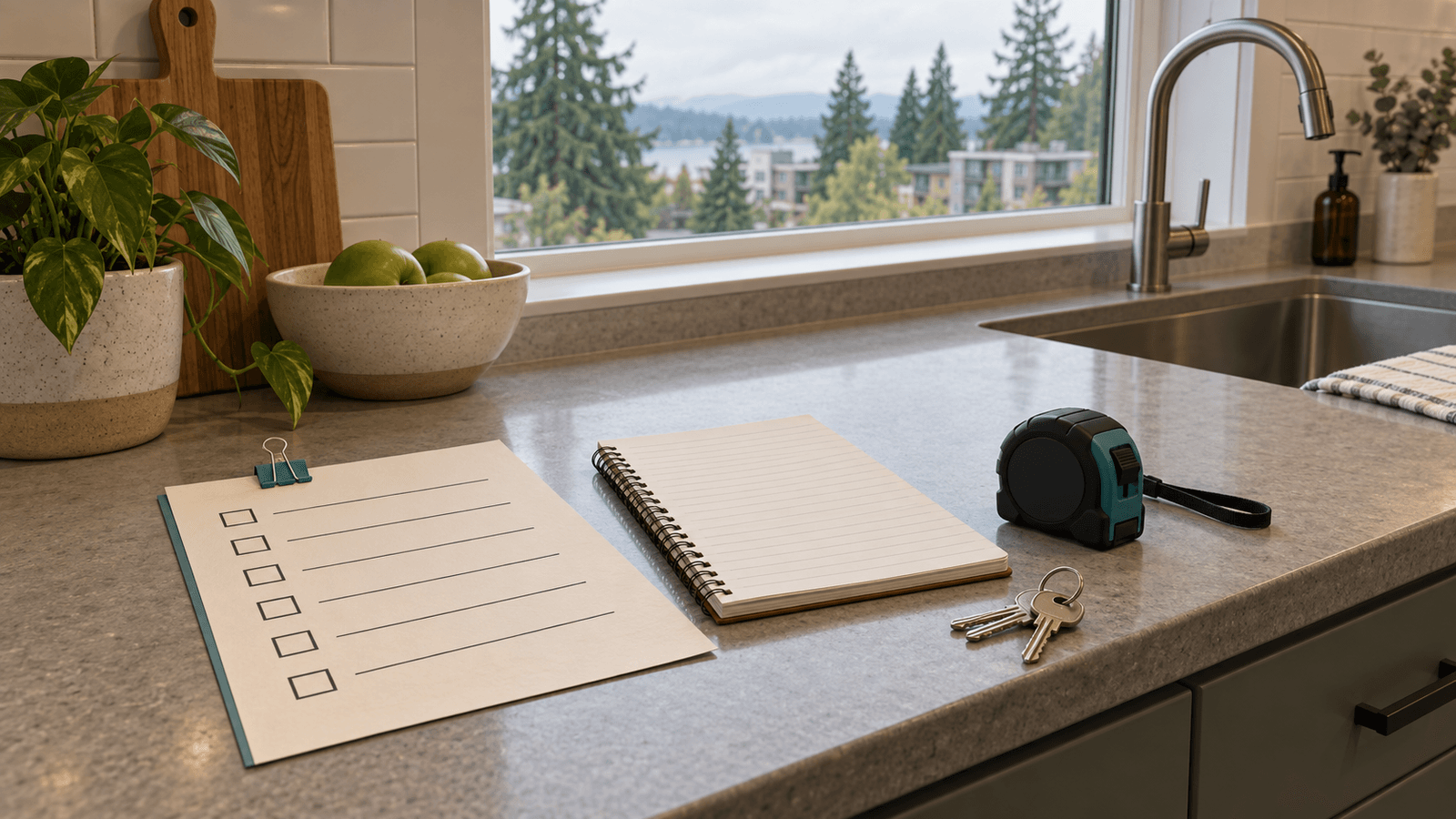

A vacancy rate cannot attend a viewing for you.
Canada Mortgage and Housing Corporation described Metro Vancouver’s 2025 purpose-built rental market as softer: more supply, less demand, slower rent growth, and more turnover. That is a useful headline. It is not a coupon or a substitute for looking at the actual unit.
Write down what you are comparing, ask the same questions in writing at each viewing, and keep market averages separate from tenancy information published by the province.
This is a general viewing checklist, not legal, tenancy, financial, or personalized advice. It does not predict what rent you will be offered. Verify current rules with the Residential Tenancy Branch.
What the official numbers describe — and what they cannot
CMHC’s 2025 Rental Market Report, published December 11, 2025, put the purpose-built apartment vacancy rate in the Vancouver census metropolitan area at 3.7%, the highest in more than 30 years. The average two-bedroom purpose-built rent was $2,363, up 2.2%. Condominium apartment rentals were tighter and more expensive: 1.5% vacant, with an average two-bedroom rent of $2,900.
CMHC’s own wording matters. It said a softer rental market, from both increased supply and lower demand, produced the lowest same-sample percentage rent change in 20 years. Average turnover rent for a two-bedroom purpose-built apartment — the rent on a new lease for a vacated unit — fell from $2,883 in October 2024 to $2,696 in October 2025. The same report described operators offering incentives such as one or two rent-free months, especially in newer buildings.
Those pages also bound the story. Only about 1% to 2% of rental units affordable to lower-income households were vacant. Downtown did not move with suburban zones. Purpose-built vacancy was not condominium vacancy.
CMHC’s Summer Update: 2026 Housing Market Outlook, published July 22, 2026, with figures updated as of June 23, 2026, expects rental markets to keep easing in 2026, more noticeably in larger markets such as Vancouver. For Vancouver, it forecasts a 3.6% vacancy rate in 2026 and an average two-bedroom rent of $2,398. Those are forecasts, not measurements of the unit you are about to enter. The same outlook still calls affordability a challenge: rents remain high relative to income, especially when units turn over.
None of this tells you whether a particular listing is a good fit, whether an incentive will be honoured, or what any one household should pay.
Four different numbers, one listing
Listings like to mash together four things that are not the same:
- Asking rent on a vacant unit — a marketing number that may hide missing utilities or a temporary incentive.
- Rent already being paid in similar buildings. CMHC’s same-sample figures describe occupied stock, not the flyer in your hand.
- Incentives. A free month changes the first-year cash outlay. It does not automatically change the rent written into a later month.
- Tenancy rules. Vacancy rates do not rewrite a tenancy agreement. Official information starts at the Residential Tenancy Branch, not in a market outlook.
B.C. also publishes a yearly rent-increase limit for existing tenancies. That limit is not asking rent on a vacant unit. Check the current official page rather than treating last year’s CMHC comparison as a rule.
Before the viewing: compare like with like
B.C.’s page on listing and showing a rental unit says a useful listing answers basic questions: bedrooms, bathrooms, whether the unit has multiple floors, what services and facilities are included, and whether pets are allowed. Use those as comparison fields before you book time.
Then match bedroom count, location, and earliest move-in date; write down what the listing says is included; note whether photos look furnished while the unit is described as unfurnished; check the commute at the hour you would actually travel; and put the same five questions in a note you can send or read from.
If two listings are not the same product, their rents are not a comparison.
At the viewing: five questions, in writing
The province’s listing-and-showing page says landlords should be prepared to answer questions about the property and the tenancy agreement. Asking in writing gives you the same record for every unit.
- What does the advertised rent include, and what is extra? Heat, hot water, electricity, internet, parking, storage, and laundry are not interchangeable. If the answer is verbal, write it down.
- Is this month-to-month or fixed-term, and what is the proposed start date? Official B.C. pages describe both forms. Hear which one is actually on offer.
- Are any incentives being offered, and will they appear in the written tenancy agreement? A free month that exists only in a hallway conversation is not a comparison field.
- What currently needs repair, and who do I contact for maintenance? Look at moisture, windows, heat, locks, outlets, water pressure, and noise at the hour you would live there.
- Can I review the written tenancy agreement before any deposit is paid? Official B.C. pages say landlords must prepare a written agreement for every tenancy, and that a tenancy is considered established once the tenant has paid the deposit. That is a reason to read first. Verify the current wording with the Residential Tenancy Branch.
Walk the unit as if you will have to describe it later without the listing photos. A viewing is not the official move-in condition inspection — a separate process the province describes for the start of a tenancy.
After the viewing: a decision log, then official pages
Before you rank units by vibe, fill in the same log for each one: asking rent; inclusions; term; start date; incentives; unanswered questions; and condition notes. Then decide whether you are still comparing like with like.
If you proceed, official information begins here — use the current pages, not a summary of them: start a new tenancy; tenancy agreements; deposits and fees; move-in condition inspections; and contact the Residential Tenancy Branch.
The deposits page currently says a security deposit can be no more than half of the first month’s rent, and that landlords cannot charge a fee for accepting, reviewing, or processing a rental application. Those are official statements to verify, not a lobby script.
What this does not mean
A softer market in a CMHC table is not a promise about your rent, neighbourhood, or bargaining position. It does not make an unaffordable unit affordable, and it does not tell you to ignore a written agreement, skip a condition inspection, or treat a forecast as a measurement. It does not change anyone’s individual outcome.
The checklist is an editorial tool for paying attention.
Sources
- CMHC, “2025 Rental Market Report” — official/public data; published December 11, 2025; accessed September 12, 2026.
- CMHC, “Summer Update: 2026 Housing Market Outlook” — official/public forecast; published July 22, 2026; figures updated as of June 23, 2026; accessed September 12, 2026.
- Province of British Columbia, “Start a new tenancy” — official government information; last updated March 4, 2026; accessed September 12, 2026.
- Province of British Columbia, “List and show a rental unit” — official government information; last updated March 4, 2026; accessed September 12, 2026.
- Province of British Columbia, “Tenancy agreements” — official government information; last updated March 4, 2026; accessed September 12, 2026.
- Province of British Columbia, “Tenancy deposits and fees” — official government information; last updated March 4, 2026; accessed September 12, 2026.
- Province of British Columbia, “Move-in condition inspection” — official government information; last updated March 4, 2026; accessed September 12, 2026.
- Province of British Columbia, “Rent increases” — official government information; last updated August 27, 2026; accessed September 12, 2026.
- Province of British Columbia, “Contact the Residential Tenancy Branch” — official government information; accessed September 12, 2026.