
Today is the day CISA's deadline lands. On November 13, CISA added CVE-2026-123039, a privilege escalation flaw in Check Point's Gaia OS, to its Known Exploited Vulnerabilities catalog, with a federal remediation due date of November 16. That is today, and the three-day window tells you how CISA reads this one: not as a theoretical bug, but as a flaw attackers already used to get root on internet-facing firewalls and then walk straight into the virtualization estate behind them.
The firewall was not the target. It was the way in.
The chain, in four steps
This was not one vulnerability. It was a chain, and each link made the next one worse.
Step one: PHP2Shell. Two flaws in the PHP engine, CVE-2026-109618 and CVE-2026-109619, rated 9.2, give unauthenticated remote code execution through Check Point's Mobile Access Portal, the web page remote users sign in to. The flaws affect Security Gateways from R80 through R82.20, plus some Spark firewall releases. No login required. A request to the portal is enough.
Step two: root on the gateway. With a shell running as the portal service account, the attackers used CVE-2026-123039, a flaw in Gaia's DynamicCLI service. A root-owned daemon called dynamic_server listens on a local socket, /tmp/dynamic_socket, with world-writable permissions, and runs whatever command it receives as root without checking who sent it. Check Point rates it 7.8. On its own it is local only. After PHP2Shell, "local" is a formality.
Step three: persistence. With root, the attackers installed the TSGA backdoor and its TSProxy component, built to blend into Check Point's own operating system layout. This is the part that survives a reboot and a casual look around.
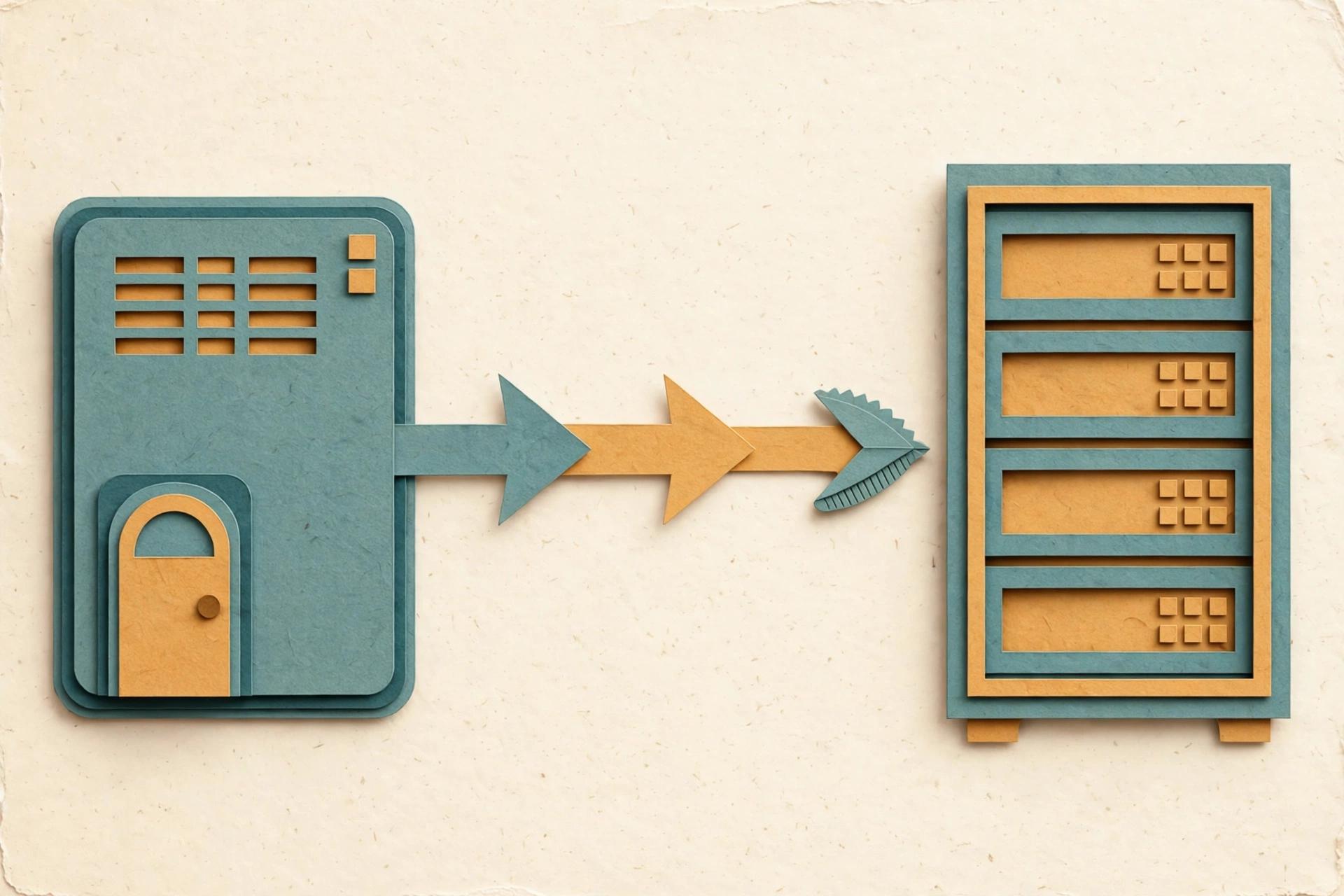
Step four: the real target. From the gateway, the attackers pivoted to VMware ESXi hosts over SSH and deployed a wiper, destroy_v6, that destroyed storage volumes. In the first wave, which Check Point says was ideologically motivated, they left notes referencing "Dream Annexation" and demanded no payment. The firewall was a stepping stone to the hypervisors. The hypervisors were the point.
The timeline that should bother you
| Date | What happened |
|---|---|
| Oct 21, 2026 | PHP ships fixes for the PHP2Shell pair |
| Oct 23, 2026 | Check Point's hotfix for Security Gateway and Management is available |
| Oct 30, 2026 | Exploitation begins, first wave against Israeli organizations, destructive |
| Nov 2, 2026 | Second wave, multi-country and cross-sector, no destructive payload observed |
| Nov 4, 2026 | Activity last observed |
| Nov 12, 2026 | Check Point publishes its advisory and the CVE-2026-123039 record |
| Nov 13, 2026 | CISA adds CVE-2026-123039 to KEV, due Nov 16 |
| Nov 16, 2026 | Federal remediation deadline |
Read that table twice. The fix was available a full week before the attacks started. Check Point says only a couple of dozen unpatched systems, in a single region, were compromised. That is the good news and the bad news in the same sentence: the patch worked, and the people who had not installed it yet got hit anyway. A week is not a long time in a change window, but it was long enough for the attackers to notice who was still exposed.
Why a "local" 7.8 still tops the queue
It is tempting to triage CVE-2026-123039 below the edge bugs. The CVSS vector says local, low complexity, low privileges required. It needs code already running on the box. In a vacuum, that is a fair read.
A Check Point gateway is not a vacuum. The box sits on the perimeter, its web portal faces the internet, and the PHP2Shell flaws hand an attacker code execution on that same box. Once the first link lands, the second link is free. Scoring the privilege escalation on its own is like scoring the second half of a burglary: the lock pick was the hard part, and it is already done.
There is a second reason not to file this one away. CISA's KEV entry carries a forensic triage flag, which means federal agencies are expected to check for signs of compromise, not just patch. Patching closes the hole. It does nothing about a backdoor that is already installed, or a wiper that already ran. Check Point says the same thing in its own advisory: absence of a match on its indicators does not rule out compromise.
What to do today
- Inventory every Check Point box. Gateways, management servers, log servers, Multi-Domain environments, Maestro orchestrators. R81 through R82.20 are in scope for CVE-2026-123039; PHP2Shell reaches back to R80 on gateways.
- Install the November Jumbo Hotfix. The fixed takes are R82.20 Take 14, R82.10 Take 52, R82 Take 132, and R81.20 Take 174, or later. The same takes carry the PHP2Shell fix. Start with internet-facing Mobile Access deployments.
- Deal with R81 and R81.10 now. They are end of support and sk1000362 lists no fix for them. That is an upgrade conversation, not a patching one, and it cannot wait behind the rest of the fleet.
- If you cannot patch yet, use the workaround. Check Point's sk1000362 describes stopping the
dynamic_serverprocess so the socket stops answering. Some DynamicCLI commands stop working until you re-enable it. That is the trade, and it is a better trade than root for anyone on the box. - Hunt before you close the ticket. Check Point's indicators: the strings
upload_progress_pwnin PHP session files, a process masquerading asCPconfigdaemon, scanner or wiper tooling dropped under/tmpor/temp, a note file referencing "Dream Annexation", unexplained gaps in firewall traffic logs, and scanning from 130.94.19.204 and 130.94.19.168. Grep/var/log/dynamicCli.logfor root commands you cannot explain. - Then check what the gateway could reach. This is the step most people skip. If the gateway had SSH access to ESXi hosts, check those hosts, their datastores, and the backups that protect them. A wiper does not care that your firewall is patched now.
Attribution is worth one honest sentence: researchers have linked the TSGA toolset to a China-nexus group tracked as Armory Castle, but Check Point has not confirmed who ran this campaign, and the first wave's motives look ideological rather than financial. Treat the actor as unknown and the exposure as the fact that matters.
The durable point
Most firewall incidents end at the firewall. This one is a reminder that the perimeter box is also a trusted insider. It holds credentials, it reaches management networks, and in this campaign it held a path to the hypervisors that run everything else. The patch matters, and it was available a week early. But the real lesson is a question to ask about every appliance you own: if someone gets root on this box, what can they reach from here? If the honest answer is "the virtualization estate," then the gateway is not just a firewall. It is the front door to the whole building, and it deserves to be patched and watched like one.
Sources
- Security Advisory: Active Exploitation of PHP2Shell and Local Privilege Escalation — Check Point Blog, November 12, 2026 (updated November 15, 2026)
- sk1000362: CVE-2026-123039 — Local Privilege Escalation in the Gaia OS Dynamic CLI Service — Check Point Support, November 12, 2026
- CVE-2026-123039 — National Vulnerability Database, published November 12, 2026
- Check Point patches zero-day that lets hackers get root access — BleepingComputer, November 13, 2026